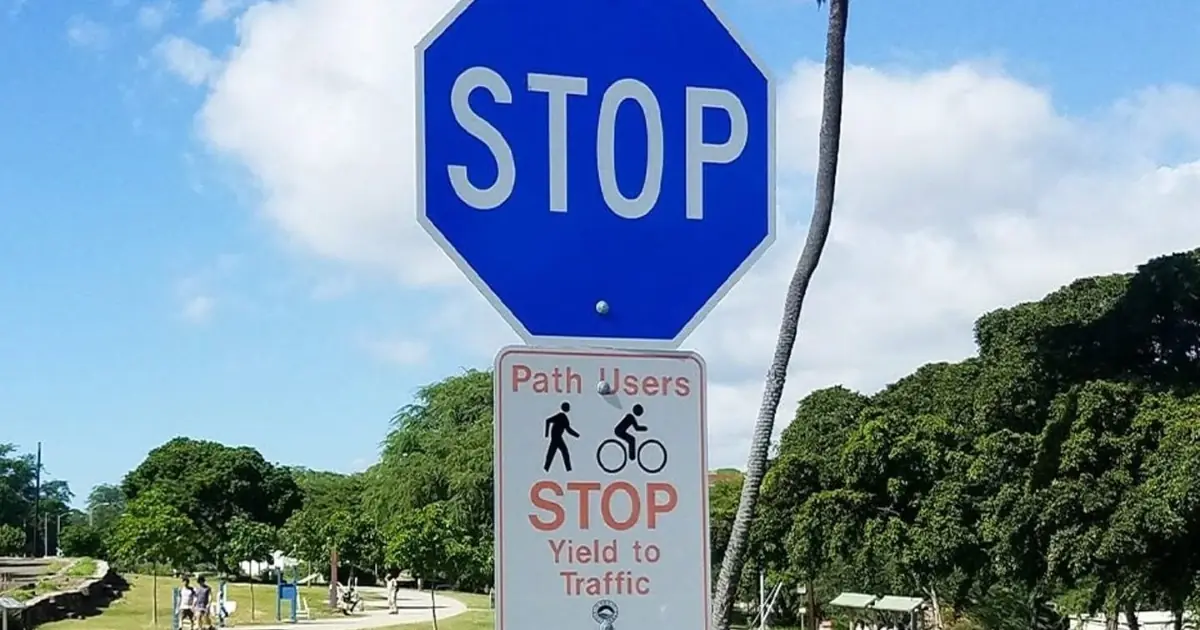
If You See a Blue Stop Sign, Here’s What It Really Means

manages the road or property.


https://images.openai.com/static-rsc-4/ljNZgJfURxekrKjSM1ghnwIn3XP_RpSuOcx2CgiQpSJMT7NL41GRd7bUDPPfCH1gu0zxAXptVwBEuabCgXOlsphkayhV1K_h-dmx9XXcZ-ZZcp6iTu-tPUIHF6opF2jkzHKWz-eN8Bu7fqUcQYLY_KWGQ4DkAgi_YeCd238qEg_TbtbzxMm7bB8KLRlSofIG?purpose=fullsize
https://images.openai.com/static-rsc-4/fRe2dYh8dF4JDpdZ0iHhzDxH5OjyyqjhjKv_wNPvoG_xDO8xbWb25h7mdQFE2KjCyH-_K8V6-RcxML1wi93ljscgssvLAw_zmswK81i6sXmpKP8XWG8vwsBSm94VjOV8UST3l1FDs1WulKJzlrA9RaSZ4z9YYvCHqaZS2cOVkXnZIrdXEeeBm9qPEZ6TVnlL?purpose=fullsize

Chapter 1: Why Are Most Stop Signs Red?


The red stop sign has become the international standard because red is highly visible and universally associated with warnings, danger, and the need to stop. Traffic authorities around the world use standardized colors and shapes to help drivers quickly recognize instructions, even from a distance.


In most countries, official stop signs must follow strict government regulations regarding color, shape, size, and placement. The familiar red octagon is designed to stand out
How would you rate this post?

No ratings yet — be the first!

Choose from 1 to 5 stars

One rating per browser for each post. You can update your rating.

Stay in the loop with Rarle USA

Want the latest recipes, practical tips and new stories? Leave your email below.

Comments

Leave a comment

Your email address will not be published. Required fields are marked *

Privacy Policy